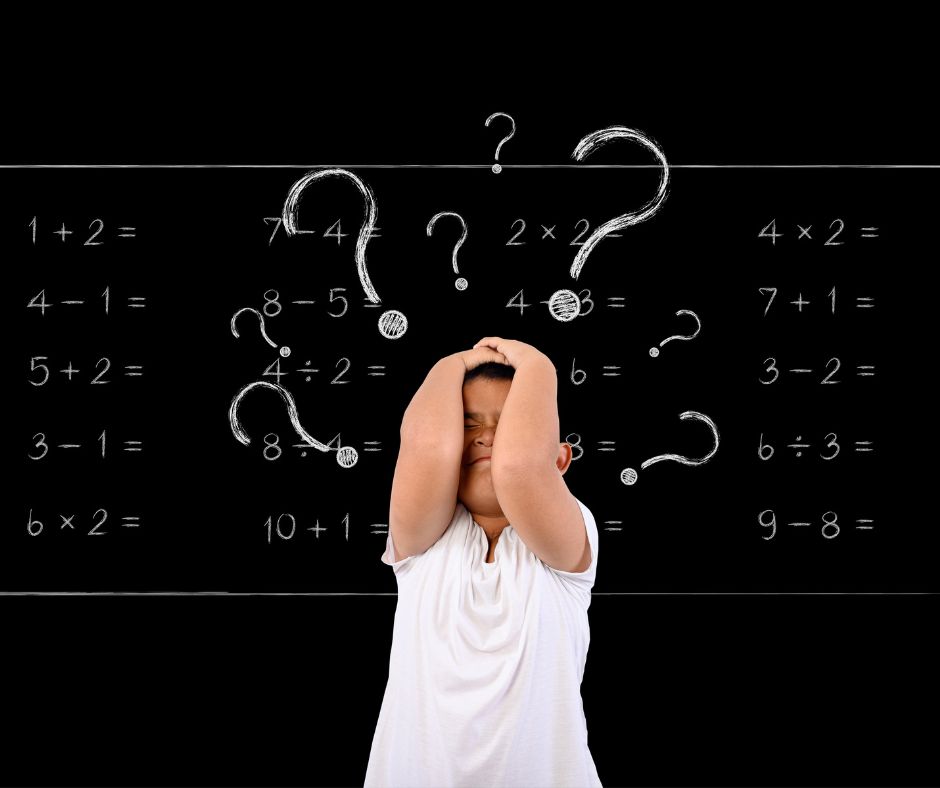
It’s a familiar scene: a modern classroom, an interactive whiteboard, and an excellent teacher explaining a new topic. The material is delivered dynamically, logically, and in a structured way. The learning conditions are absolutely equal for all thirty students.
But as the lesson concludes, we see the classic outcome: one half of the class understood everything and is ready to solve problems, while the other half stares at their notebooks in complete confusion.
The education system's initial reaction is always predictable. We start looking for someone to blame. Teachers say: "Kids these days are lazy, they can't concentrate, they're always on their phones." Parents complain: "The teacher can't explain things properly, the curriculum is too difficult." The children themselves start believing that they simply "have no aptitude for math" or that they are "not cut out for STEM."
But what if the problem isn't laziness, the teacher's qualifications, or the curriculum at all?
Treating Symptoms Instead of Finding the Cause
Imagine going to a doctor complaining of severe leg pain, and without even looking at it, they simply prescribe a painkiller. Sounds absurd? Any competent doctor would first send you for an X-ray or MRI to see what is hidden from the naked eye. Treating a fracture with vitamins or a band-aid is useless until the true cause of the pain is clear.
Paradoxically, in the traditional education system, we often act exactly like that doctor. We try to "cure" bad grades (assigning extra classes, hiring tutors, scolding for inattention) without seeing the real, underlying cause of the underperformance.
Schools are great at measuring knowledge - that's what tests and exams are for. But schools almost never measure the brain's capacity to acquire that knowledge.
The Difference Between "Software" and "Hardware"
The learning process can be compared to trying to download a heavy file (new knowledge) onto a computer. No matter how high-quality the file is, if the device lacks RAM or the processor overheats, the system will freeze.
When a child cannot solve a problem, it rarely means they are fundamentally incapable of understanding it. Most often, the reason lies in a lag within a specific cognitive function at that given moment.
- Working Memory: A child may have excellent logic, but their working memory capacity isn't enough to hold all the conditions of a problem until they finish reading it. They reach the question and have already forgotten the beginning.
- Concentration: A lesson lasts 45 minutes, but a specific student's neural network might only be capable of maintaining focus for a maximum of 5 minutes before the brain needs a micro-pause. If the most crucial explanation occurs during the 6th minute, the child simply won't process it.
- Processing Speed: The teacher speaks at a normal pace, but the child's cognitive data processing speed is slightly lower. They literally don't have enough time to decode the teacher's words into meaning.
In all these cases, the child appears "inattentive" or "incapable." But in reality, their brain physically could not receive this information.
Why Education Needs an "X-Ray"
Until we learn to look "under the hood" of the educational process, we will continue teaching children blindly.
The transition to truly effective education is impossible without implementing objective monitoring of cognitive abilities. We need a tool that works like an X-ray, showing the teacher the invisible landscape of a child's perception:
- "We have an excellent potential in abstract thinking here; let's rely on it."
- "Concentration is dipping here, so giving this student long instructions is pointless - we need to break tasks down into shorter stages."
This approach shifts the very paradigm of communication between school and family. Teachers no longer need to make excuses to parents or blame the student. Objective data diffuses emotional tension. The conversation moves in a constructive direction: we see exactly which function is currently the "bottleneck," and we understand how to train it and how to adapt our teaching methods to it.
Fair and quality education begins where guesswork ends. And the time has come when it's necessary to measure not only what a child has learned, but also how ready their brain is to learn.